
Material notes
Green fluorite can look like water, glass or a small landscape held inside stone. Its appeal in an interior comes from the combination of color, translucency and form — not from needing a room to be built around it.
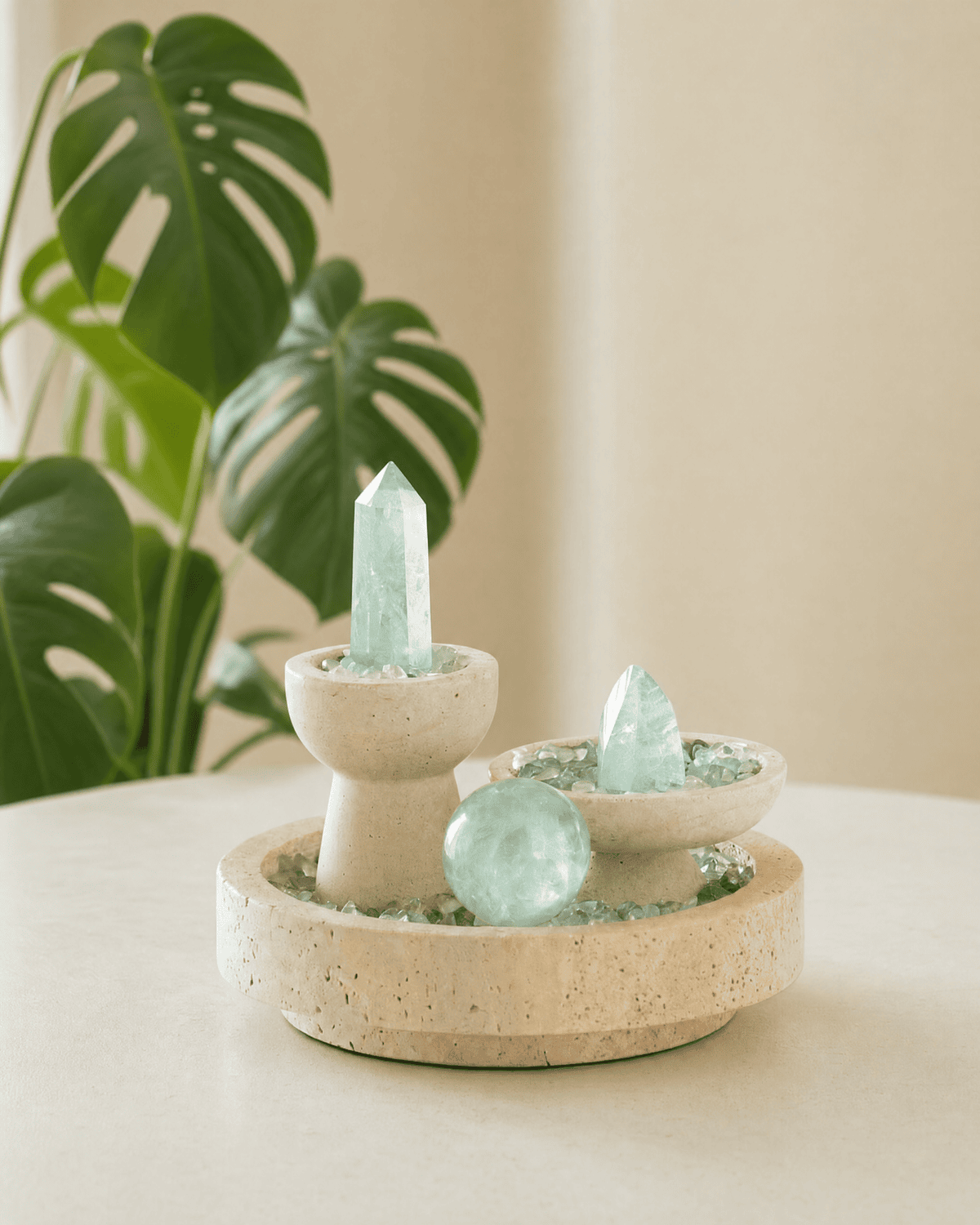
Green fluorite works well in modern interiors because its color sits between mineral green, aqua and clear translucency. It can read as sculptural and natural at the same time, especially when paired with travertine, pale timber or warm neutral surfaces.
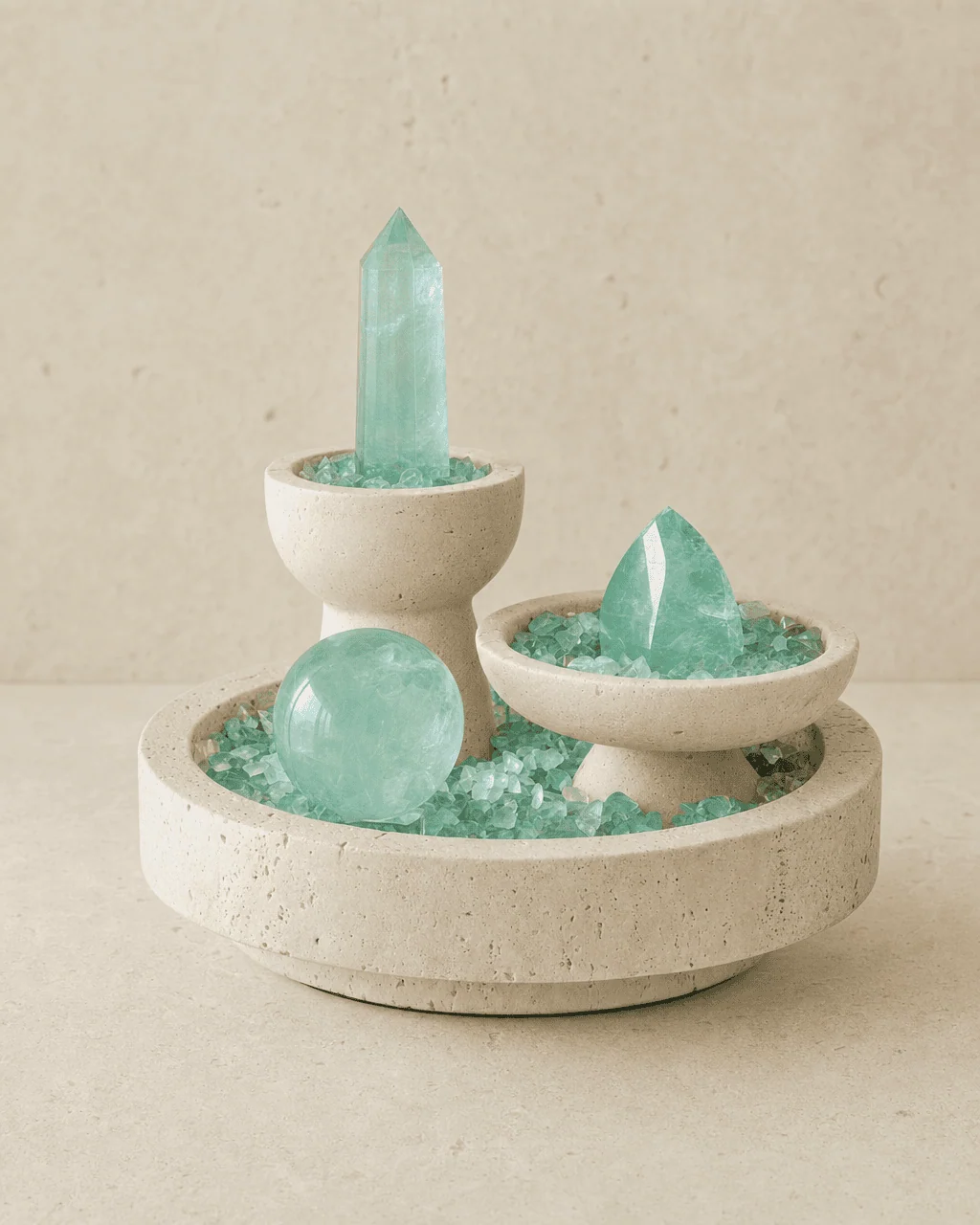
What does green fluorite look like?
Green fluorite is visually distinctive because the color often shifts within a single piece. Green areas can fade toward clear, blue-green or pale aqua, while internal zoning and small inclusions create depth beneath the polished surface.
In an interior, that variation matters. From a distance the object reads as a controlled green accent. Up close, translucent edges and internal bands change as the light moves.
Why it works in a quiet room
Many green decorative objects are opaque. Fluorite is different. Its transparency keeps the color from feeling heavy, so it can add a stronger hue without overwhelming a neutral palette.
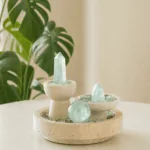
We especially like it beside travertine because the materials behave in opposite ways. Travertine is matte, porous and warm; fluorite is smoother, cooler and visually deeper. The contrast makes both materials easier to read.
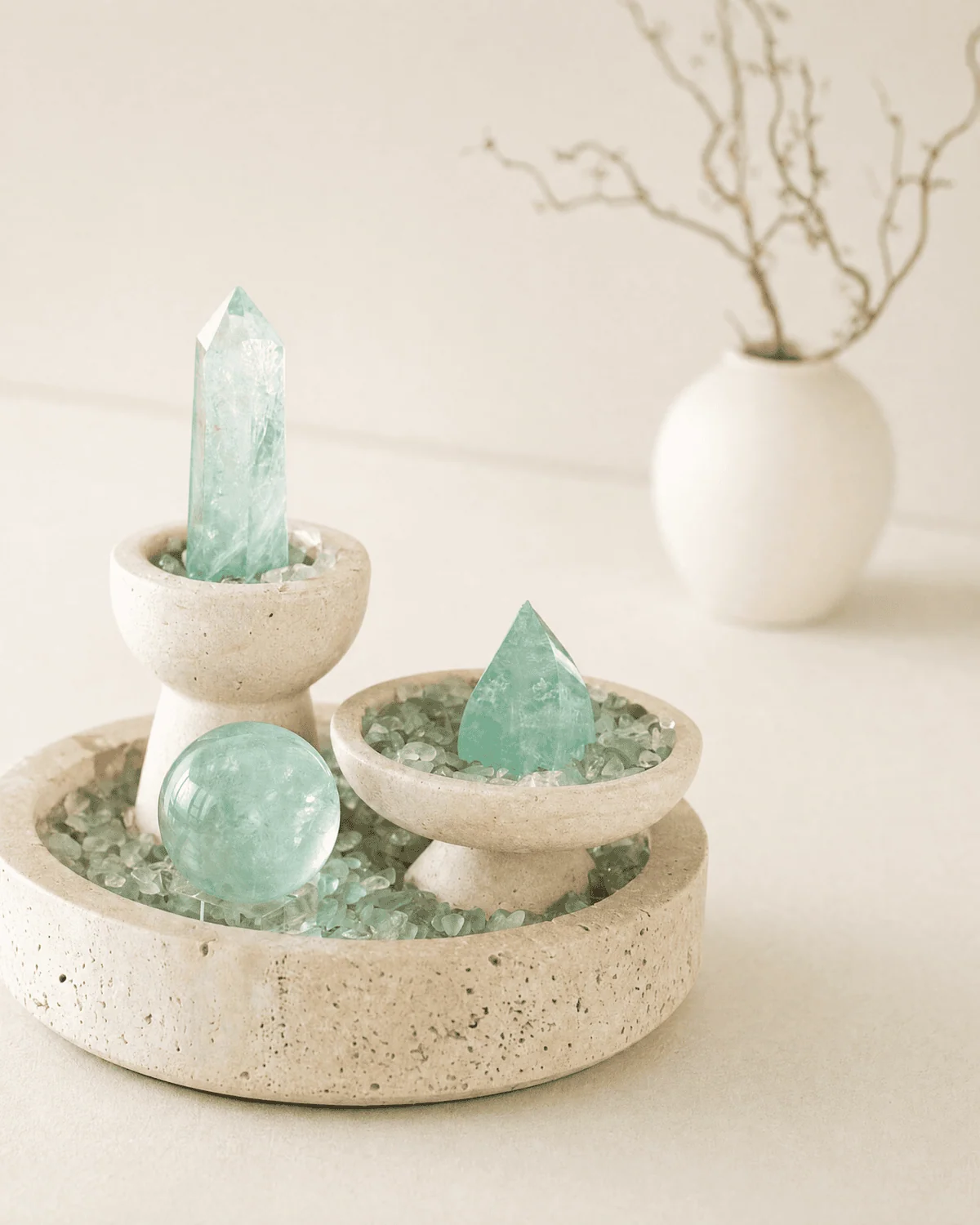
Sphere, point or freeform: which shape changes the room most?
| Form | How it reads | Best placement |
|---|---|---|
| Sphere | Soft, reflective and visually calm | Coffee table, low shelf, bedside |
| Point | Vertical, directional and graphic | Console, desk, open shelving |
| Freeform | Organic and more geological | Bookcase, side table, collected display |
| Mixed composition | Layered and sculptural | Console, coffee table, larger shelf |
A mixed composition is useful when you want one object to carry more visual weight without increasing the number of separate accessories in the room.
Where to place green fluorite
Fluorite benefits from indirect natural light because translucency is part of what makes the material interesting. A console near a window, an open shelf or a coffee table with some daylight usually shows the material better than a dark enclosed niche.
Avoid crowding it with several strongly colored objects. Green fluorite tends to look best when it is allowed to be the main chromatic note in its immediate area.
What does fluorite mean?
Fluorite is often associated with focus, order and clarity in contemporary crystal culture. We treat those associations as a personal layer rather than a promise: some people choose fluorite because of the meaning, others because of the color, and many because both feel right together.
View Fluorite Three Forms on Travertine →
Frequently asked questions
Is green fluorite suitable for minimalist interiors?
Yes. Its color is noticeable, but the transparency keeps it visually lighter than many opaque green materials. One piece is often enough to create a focal point.
What colors pair with green fluorite?
Warm white, travertine, oak, walnut, muted metal and natural linen all work well because they allow the green to remain the strongest color.
Is fluorite only decorative?
Fluorite can be appreciated simply as a mineral object. Its associations with focus and clarity are cultural and personal rather than guaranteed effects.